- All
- Product Name
- Product Keyword
- Product Model
- Product Summary
- Product Description
- Multi Field Search
Please Choose Your Language

Views: 0 Author: Site Editor Publish Time: 2026-07-30 Origin: Site


The at-home fitness market is heavily saturated with portable workout devices claiming to deliver studio-level results. Consumers and fitness practitioners struggle to find space-efficient equipment that genuinely replicates the tension and postural support of a traditional Pilates reformer. Skepticism surrounds compact tools, making it difficult to separate marketing claims from actual biomechanical benefits. This article provides an objective evaluation of the pilate bar. We will analyze whether it can legitimately deliver measurable improvements in core stability, spinal alignment, and joint mobility without the typical industry fluff. We look directly at the mechanics of elastic resistance, the structural integrity of the equipment, and the physiological responses of the human body when subjected to these specific training modalities. By stripping away the promotional language, we can assess the true utility of this equipment for daily physical conditioning.
Core Strength Reality: A pilate bar effectively challenges core stability through asymmetrical and rotational movements, but lacks the progressive overload necessary for advanced muscular hypertrophy.
Postural Benefits: Consistent use supports postural correction by engaging the posterior chain and providing tactile feedback for spinal alignment, aligning with clinical observations on Pilates-based interventions.
Flexibility Mechanics: The integration of exercise bands allows for assisted stretching and improved active range of motion, though it cannot replace targeted mobility protocols for severe restrictions.
Decision Verdict: Best suited for beginners, rehabilitation contexts, and maintaining baseline fitness; advanced practitioners will eventually outgrow the fixed resistance limits.
Effective resistance training for Pilates requires constant tension, smooth eccentric phases, and structural stability. A proper system must allow users to engage their muscles continuously throughout the entire range of motion. Traditional studio reformers achieve this using heavy-duty springs and a sliding carriage. Replicating this stimulus at home requires a tool that can provide variable resistance while maintaining a rigid structure for the user to push or pull against. The standard construction of a portable system involves a rigid steel or aluminum bar paired with elastic components. These components usually consist of resistance tubes attached to foot loops. The rigid bar acts as a lever and a stabilizing anchor. Users grip the bar while their feet secure the loops, creating a closed-chain resistance environment. This setup mimics the footbar and strap mechanics found on larger studio equipment.
Understanding resistance curves is necessary when evaluating this tool. Free weights provide constant resistance dictated by gravity. Traditional reformer springs offer a relatively smooth, linear increase in tension. Elastic tubes provide linear variable resistance. As the band stretches, the tension increases significantly. This means the movement is easiest at the starting position and hardest at the end range of motion. This specific resistance curve forces muscles to work harder during peak contraction, which is highly effective for endurance and stability training. The material composition of the bar itself also plays a role in force distribution. A high-gauge steel bar will not flex under heavy loads, ensuring that the force generated by the user is transferred directly into the elastic components rather than being lost to equipment deformation.
To fully grasp the biomechanical differences, we must look at how different resistance profiles affect muscle recruitment. When you lift a dumbbell, the weight remains the same, but the leverage changes depending on joint angle. With elastic resistance, the actual load increases as you move through the concentric phase. This requires the nervous system to recruit more motor units as the movement progresses, leading to a unique neuromuscular adaptation that favors stability and control over raw power output.
Resistance Type | Load Profile | Primary Biomechanical Advantage | Limitation |
|---|---|---|---|
Free Weights | Constant (Gravity-dependent) | Consistent load for hypertrophy and absolute strength | Momentum can reduce muscle activation at certain angles |
Reformer Springs | Linear (Smooth increase) | Frictionless, controlled eccentric phases | Requires large, stationary equipment |
Elastic Tubes | Variable (Exponential increase) | Peak tension at end-range of motion; high core activation | Resistance drops off at the beginning of the movement |
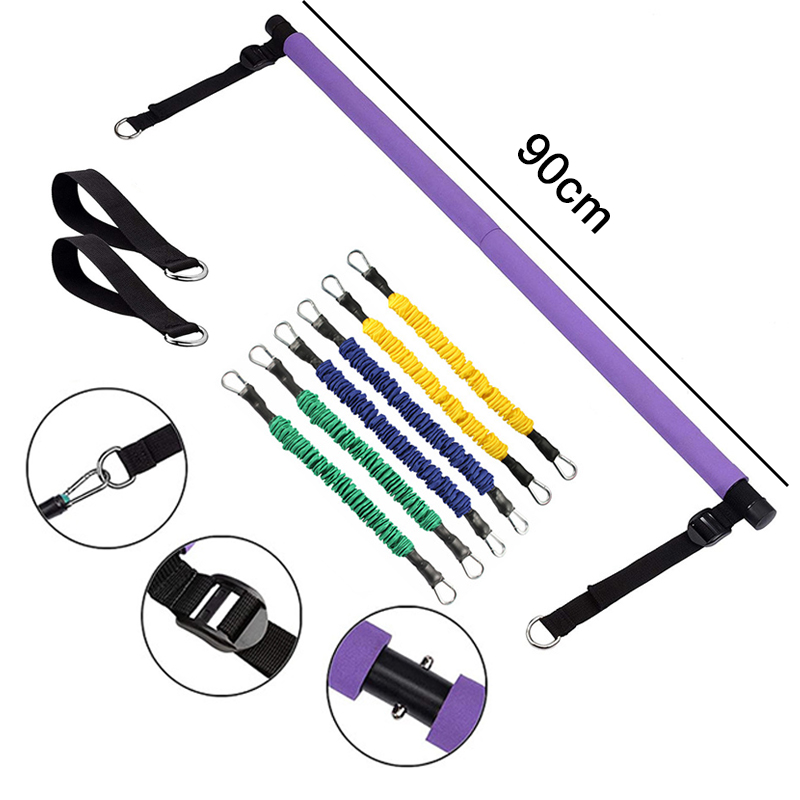
The inherent instability of elastic resistance forces the core musculature to adapt continuously. When a user performs an exercise, the transverse abdominis and obliques must fire to maintain balance and control the variable tension. This continuous firing prevents the torso from collapsing under the pulling force of the bands. The rigid bar ensures that the hands remain in a fixed position relative to each other, which helps isolate the core muscles rather than allowing the arms to compensate independently. This equipment excels in rotational and anti-rotational movements. Exercises like standing twists and woodchoppers build functional core strength. During a standing twist, the user must rotate the torso against the increasing tension of the bands. The anti-rotational aspect comes into play during the eccentric phase, where the core must actively resist the bands pulling the torso back to the starting position. This dual action targets the deep stabilizing muscles of the trunk.
Combining barre-style standing postures with this tool further challenges lateral core stability. When a user performs a standing side bend or a single-leg balance exercise, the entire kinetic chain is engaged. The bar provides a tactile reference point, similar to a ballet barre, but with added resistance. This combination demands high levels of total body strength and proprioception, forcing the core to stabilize the spine against asymmetrical loads. The mechanics of standing core work differ vastly from floor-based exercises. On the floor, the ground provides passive stability. Standing requires active stabilization from the feet up through the pelvis and into the shoulder girdle.
To maximize core engagement, specific protocols must be followed. Simply going through the motions will not yield results. The user must actively brace the abdominal wall.
Establish a neutral pelvis before initiating any pull or push movement.
Inhale to prepare, expanding the ribcage laterally.
Exhale forcefully during the concentric phase (the hardest part of the movement) to engage the pelvic floor and transverse abdominis.
Maintain a slow, controlled tempo during the eccentric phase, resisting the pull of the elastic bands.
Keep the shoulders depressed and retracted to prevent the upper traps from taking over the workload.
There is a clear ceiling effect regarding core strength gains. The system is excellent for building foundational stability and muscular endurance. Yet, it lacks the scalability required for advanced muscular hypertrophy. Once a user achieves baseline core stability, they will eventually need thicker exercise bands or traditional free weights to continue progressive overload. The fixed nature of many portable bars means that advanced practitioners may outgrow the maximum resistance offered by the standard attachments. Progressive overload requires systematically increasing the demand on the musculoskeletal system. When the bands can no longer provide sufficient tension, the user must transition to heavier implements to force further adaptation.
Established scientific consensus indicates that targeted Pilates exercises correct poor alignment. Systematic reviews on Pilates interventions show that strengthening posture-supporting muscle groups helps maintain baseline body balance. Consistent practice addresses muscular imbalances that pull the skeleton out of alignment. The portable bar system facilitates these specific movements, making clinical postural benefits accessible in a home environment. Engaging the posterior chain is vital for counteracting forward-head posture and rounded shoulders. The bar facilitates proper form in exercises like deadlifts and upright rows. When performing a row, the user must retract the scapula, targeting the rhomboids, latissimus dorsi, and erector spinae. The rigid nature of the bar ensures an even pull across both sides of the body, preventing one dominant side from taking over. This symmetrical engagement strengthens the upper back, pulling the shoulders back into a neutral position.
Beyond strength, the bar serves as a physical guide and balance aid. For older adults or individuals with proprioceptive deficits, standing stability exercises can be daunting. The bar acts similarly to a ballet barre, providing tactile feedback for spinal alignment. Holding the rigid structure helps users maintain an upright posture during squats or lunges. This support allows individuals to focus on muscle engagement and joint tracking without the immediate fear of losing their balance. The tactile feedback provided by the rigid bar allows the central nervous system to better map the body's position in space. This proprioceptive enhancement is a major factor in improving static and dynamic balance.
Specific postural deviations require targeted interventions. The equipment can be used to address several common issues.
Upper Crossed Syndrome: Use the bar for face pulls and reverse flyes to strengthen the lower traps and rhomboids while stretching the pectorals.
Lower Crossed Syndrome: Perform assisted glute bridges and standing hip extensions to activate the gluteus maximus and stretch the hip flexors.
Lateral Pelvic Tilt: Engage in asymmetrical standing side bends to balance the quadratus lumborum and obliques on both sides of the spine.
Forward Head Posture: Utilize seated rows with a focus on cervical retraction, keeping the chin tucked and the neck long.
The effectiveness of these corrective exercises relies entirely on execution. If the user allows their shoulders to elevate or their lower back to hyperextend during the movements, the postural benefits are negated. The resistance must be light enough to allow for perfect form. Heavy resistance often causes the body to revert to its dysfunctional compensatory patterns. The goal is neuromuscular re-education, not maximal force production.
Flexibility training benefits greatly from the combination of leverage and elasticity. The rigid bar provides a firm grip, while the elastic tubes assist users in achieving deeper, controlled stretches. Active stretching involves contracting the antagonist muscle to stretch the agonist muscle. Passive stretching relies on an external force. The bar system blends both. During a hamstring stretch, the user can actively push their foot against the loop while using the bar to gently pull the leg closer, increasing the stretch safely. Supporting spinal articulation and hip mobility is a core principle of this training style. The tool allows users to perform exercises like roll-ups and leg circles with guided resistance. The tension from the bands supports the weight of the limbs, preventing the joints from being forced past their safe end-range. This guided mobility work lubricates the joints and improves the active range of motion without the high risk of overstretching associated with unassisted flexibility routines.
When comparing these flexibility outcomes to static stretching or traditional yoga, a distinct advantage emerges. Static stretching lengthens the muscle but does not necessarily build strength in that new range. The elastic resistance requires the user to control the movement throughout the entire stretch. This strengthens the muscles at their end-range of motion, leading to more functional and usable flexibility rather than just passive tissue lengthening. Mobility is defined as usable flexibility. If you can passively pull your leg behind your head but cannot actively lift it past your waist, you lack mobility. The resistance provided by the elastic components forces the muscles to contract even while they are lengthening, building strength at the extreme ends of the joint's range of motion.
Implementing a mobility routine with this equipment involves specific techniques.
Dynamic Warm-up: Begin with light, full-range movements like torso twists and overhead reaches to increase blood flow to the connective tissues.
Assisted Articulation: Perform slow spinal roll-downs, using the tension of the bands to control the descent and ascent, focusing on moving one vertebra at a time.
PNF Stretching: Utilize Proprioceptive Neuromuscular Facilitation by pushing against the band's resistance for 5 seconds, relaxing, and then pulling into a deeper stretch.
End-Range Isometrics: Hold the stretched position while actively contracting the stretched muscle against the band for 10-15 seconds to build strength in the new range.
Evaluating this tool requires comparing it against traditional studio reformers, standalone elastic bands, and free weights. Studio reformers offer a sliding carriage and highly adjustable spring tension, creating a frictionless environment for complex movements. Standalone bands are highly portable but lack a rigid handle for symmetrical upper body engagement. Free weights provide constant, heavy loads ideal for hypertrophy but lack the variable resistance curve beneficial for joint stability. The financial and spatial investment heavily favors the portable bar. A budget-friendly portable system requires minimal storage space and can be packed in a suitcase. In contrast, a high-end home reformer demands a dedicated room and represents a significant financial commitment. For users seeking baseline fitness maintenance or a travel-friendly option, the portable system offers a highly favorable value proposition.
There is a conceptual trade-off between versatility and specialization. The portable bar is highly versatile for full-body maintenance and postural correction. Yet, it lacks the micro-adjustability of reformer spring tensions. It also cannot support the heavy load capacity of barbells required for maximal strength training. Users must align their equipment choice with their primary fitness goals, recognizing that the portable bar is a generalist tool rather than a specialized mass-building device. The rigid bar provides a mechanical advantage for upper body pressing and pulling movements that standalone bands cannot match. When using standalone bands, the hands move independently, requiring more stabilization from the shoulder joint. The rigid bar locks the hands into a fixed plane, allowing the user to generate more force and target the larger muscle groups of the chest and back more effectively.
Equipment Type | Space Requirement | Primary Use Case | Adjustability |
|---|---|---|---|
Portable Bar System | Minimal (Can be stored in a drawer) | Baseline core strength, travel fitness, posture correction | Moderate (Depends on interchangeable bands) |
Studio Reformer | High (Requires dedicated floor space) | Advanced Pilates, frictionless mobility, precise rehabilitation | High (Micro-adjustable spring tension) |
Standalone Bands | Very Minimal (Pocket-sized) | Rehab, glute activation, light resistance training | Low (Requires buying multiple band thicknesses) |
Dumbbells/Kettlebells | Moderate (Requires a rack or floor space) | Hypertrophy, absolute strength, heavy loading | High (If using adjustable weight sets) |
Form breakdown is a primary risk when using elastic resistance. If the core is not properly engaged during heavy pulling movements, users often compensate by arching their lower back. This compensatory pattern can lead to lumbar strain. To mitigate this, users must focus on posterior pelvic tilt and active transverse abdominis engagement before initiating any movement. Proper breathing techniques—exhaling on the exertion phase—also help maintain intra-abdominal pressure and protect the spine. Equipment failure poses a physical danger. Cheap, non-sleeved elastic tubes can snap under high tension, potentially causing injury. Selecting high-quality bars is necessary. Look for systems featuring fabric-covered bands or thick, durable latex. Secure carabiner attachments are also essential to prevent the bands from detaching from the bar during an exercise. Regular inspection of the elastic components for micro-tears can prevent unexpected failures.
Anchoring and sizing issues frequently arise with fixed-length systems. Fixed bands may not provide adequate tension for very tall individuals, or they may provide too much tension for shorter users, restricting their range of motion. Adjustable bands are necessary for safe and effective implementation. Systems that allow users to wrap the band around the bar to shorten it, or those offering interchangeable bands of varying lengths, ensure that the resistance matches the user's specific biomechanics. When setting up the equipment, always test the tension before committing to a full set. Stand with feet shoulder-width apart and perform a slow test repetition. If the band goes slack at the bottom of the movement, the resistance is too light or the band is too long. If you cannot complete the full range of motion without breaking form, the resistance is too heavy.
To ensure safety and longevity of the equipment, follow these maintenance and usage guidelines.
Inspect the connection points between the elastic tubes and the carabiners before every workout.
Store the equipment away from direct sunlight and extreme temperatures, which degrade latex and rubber.
Never stretch the bands beyond 2.5 times their resting length to prevent snapping.
Wear appropriate footwear to ensure the foot loops do not slip during standing exercises.
Clean the rigid bar with a damp cloth to maintain grip integrity, especially if it features foam padding.
Assess your current baseline strength and mobility to determine if elastic resistance aligns with your immediate physical conditioning goals.
Verify the material specifications of any system before acquisition, prioritizing fabric-sleeved bands and steel construction over cheap plastics.
Establish a dedicated 15-minute daily routine focusing strictly on posterior chain engagement and core stabilization to maximize postural benefits.
Consult a certified physical therapist or instructor if you are using the equipment for post-rehabilitation to ensure proper joint tracking.
A: It cannot fully replace a reformer. A reformer uses a sliding carriage and metal springs for smooth, constant tension and micro-adjustability. The portable bar uses elastic resistance, which increases tension as it stretches. However, the bar is an excellent, space-saving alternative for home use that mimics many fundamental reformer movements.
A: Neuromuscular adaptation begins almost immediately. With consistent use, most users notice measurable improvements in postural awareness and baseline balance within 4 to 6 weeks. Structural muscle growth supporting these changes takes slightly longer.
A: It depends on the model. Premium systems offer interchangeable bands of varying resistance levels and lengths. Budget models often feature fixed-length bands. Adjustable systems are highly recommended to accommodate different heights and strength levels safely.
A: Yes, it can be very safe and beneficial. The rigid bar provides balance support, and the exercises strengthen core stabilization, which often alleviates lower back pain. However, individuals with existing medical conditions must obtain medical clearance before starting a new routine.
A: It is designed for muscular endurance, toning, and stability rather than significant hypertrophy. Elastic resistance lacks the heavy, constant load required to build large muscle mass. It is ideal for functional strength, but not for traditional bodybuilding goals.
