- All
- Product Name
- Product Keyword
- Product Model
- Product Summary
- Product Description
- Multi Field Search
Please Choose Your Language

Views: 0 Author: Site Editor Publish Time: 2026-09-28 Origin: Site


Step into any training facility, and you will spot a common dilemma. Many lifters strap on a belt too early, risking core underdevelopment. Others wait too long, limiting their maximal strength progression and compromising their safety. A belt is not a passive support device. It does not magically fix poor lifting mechanics. Instead, it serves as an active performance tool designed to amplify Intra-Abdominal Pressure (IAP).
This guide covers specific load percentages, exercises, and training milestones. You will learn exactly when to use a weightlifting belt based on your unique lifting profile. We break down the precise moments you need equipment and when you should rely on raw core strength. By understanding these thresholds, you can safely push your physical limits while building a resilient midline.
Primary trigger: Belts should be introduced when lifting at or above 75–80% of your One-Rep Max (1RM), or an RPE (Rate of Perceived Exertion) of 8 or higher.
Prerequisite: Trainees must first master the Valsalva maneuver and possess foundational core bracing mechanics without equipment.
Exercise specificity: Belts are highly effective for heavy compound spinal-loading movements (squats, deadlifts, overhead presses) but redundant for isolation exercises.
Sourcing matters: The effectiveness of a belt depends heavily on its rigidity and build quality, making it crucial to evaluate the weightlifting belt manufacturer or supplier carefully.
We must first debunk a pervasive fitness myth. Belts do not directly "support the back" by holding your spine in place. Instead, they provide a rigid, external wall for your abdominal muscles to push against. This active expansion increases Intra-Abdominal Pressure (IAP). High IAP stabilizes the lumbar spine from the inside out, creating a rigid cylinder protecting your vertebrae during heavy lifts.
Your training age and technical proficiency dictate your readiness. Using a belt during your first few months of training introduces significant risks. Novices often use equipment to mask technique flaws. For example, a beginner might rely on a belt to hide a "butt wink" at the bottom of a squat or dangerous spinal flexion during a deadlift. Building intrinsic core strength must always come first.
The core prerequisite is mastering the Valsalva maneuver. This breathing technique involves taking a deep diaphragmatic breath and holding it against a closed glottis while bearing down. You must learn to brace your core independently. If you cannot correctly brace unbelted, a belt simply provides a false sense of security. You will fail to generate IAP, leaving your spine vulnerable.
How do you know you meet the success criteria? You are ready for a gym lifting belt when your unbelted form remains static and safe under moderate loads. You should notice that localized core fatigue—rather than leg or back weakness—is causing you to fail primary compound lifts. Once your core becomes the limiting factor, external bracing becomes a valuable tool.
Knowing when to buckle up requires tracking your workout intensity. The universally accepted percentage rule suggests introducing a belt at 75–80% of your One-Rep Max (1RM). Submaximal sets below 75% should primarily remain unbelted. Lifting lighter weights without equipment builds your intrinsic core capacity. It forces your stabilizing muscles to work harder, ensuring balanced muscular development.
For athletes who do not test their 1RM frequently, the Rate of Perceived Exertion (RPE) framework is highly effective. The RPE scale measures how hard a set feels out of 10. You should reach for your belt during sets hitting RPE 8, 9, or 10. At an RPE 8, you have roughly two reps left in the tank. At this intensity, spinal loading is significant enough to warrant extra stabilization.
Consider the implementation reality. A 5-rep max might equal 85% of your true 1RM. This 5-rep set warrants a weightlifting belt for heavy lifting just as much as a single maximum attempt. Do not reserve your belt strictly for singles. Any set pushing your musculature near absolute failure benefits from increased IAP.
We must also address the dynamic between volume and intensity. High-volume sets exceeding 10 reps present unique challenges. Cardiovascular fatigue often sets in before muscular failure. As you breathe heavier, your bracing mechanics naturally degrade. A belt mitigates this late-set form degradation. It gives you a tactile cue to keep pushing your abs outward, maintaining spinal safety even when you feel exhausted.
Belt Usage Decision Matrix
Intensity Measure | Belt Recommendation | Primary Reason |
|---|---|---|
Below 70% 1RM | Unbelted | Builds intrinsic core strength and reinforces raw bracing mechanics. |
75% – 85% 1RM | Belted | Maximizes IAP for heavy working sets, preventing core fatigue. |
RPE 8 to 10 | Belted | Stabilizes the spine near muscular failure during high-exertion sets. |
High Volume (10+ reps) | Situational | Prevents form breakdown caused by cardiovascular exhaustion. |
Not all exercises demand maximum core bracing. You must align your equipment usage with specific movement patterns.
Squatting requires immense spinal stability. High spinal compression demands maximum IAP to keep your torso upright. A dedicated lifting belt for squat sessions allows you to transfer force efficiently from your legs through your trunk and into the barbell. Placement variations matter here. High-bar squatters typically wear the belt directly over the navel. Low-bar squatters, who utilize more forward lean, often wear it slightly lower to accommodate aggressive hip angles.
Pulling from the floor introduces nuanced setup challenges. Utilizing a lifting belt for deadlift training can sometimes restrict your starting position. A thick belt might pinch your ribs or prevent optimal hip flexion during a conventional deadlift setup. Sizing solutions exist for this exact problem. Many elite pullers switch to a tapered belt or a flexible 10mm model instead of a rigid 13mm leather slab. This allows better mobility while still offering vital lumbar support.
Overhead presses and Olympic lifts also benefit from stabilization. Standing presses place massive torque on the lumbar spine. Belting up prevents excessive leaning and hyperextension. However, Olympic weightlifters performing cleans and snatches face unique bar path issues. A thick buckle can catch the barbell during the explosive upward pull. Athletes in these disciplines require tapered profiles. A belt wider at the back and narrow at the front avoids bar interference entirely.
Knowing where NOT to use them is equally important. Bench pressing rarely requires a belt unless you need specific powerlifting arch support. Machine work completely removes spinal loading, rendering belts useless. Isolation movements like bicep curls, triceps extensions, and lat pulldowns do not require IAP generation. Wearing a belt during these exercises offers zero performance benefits.
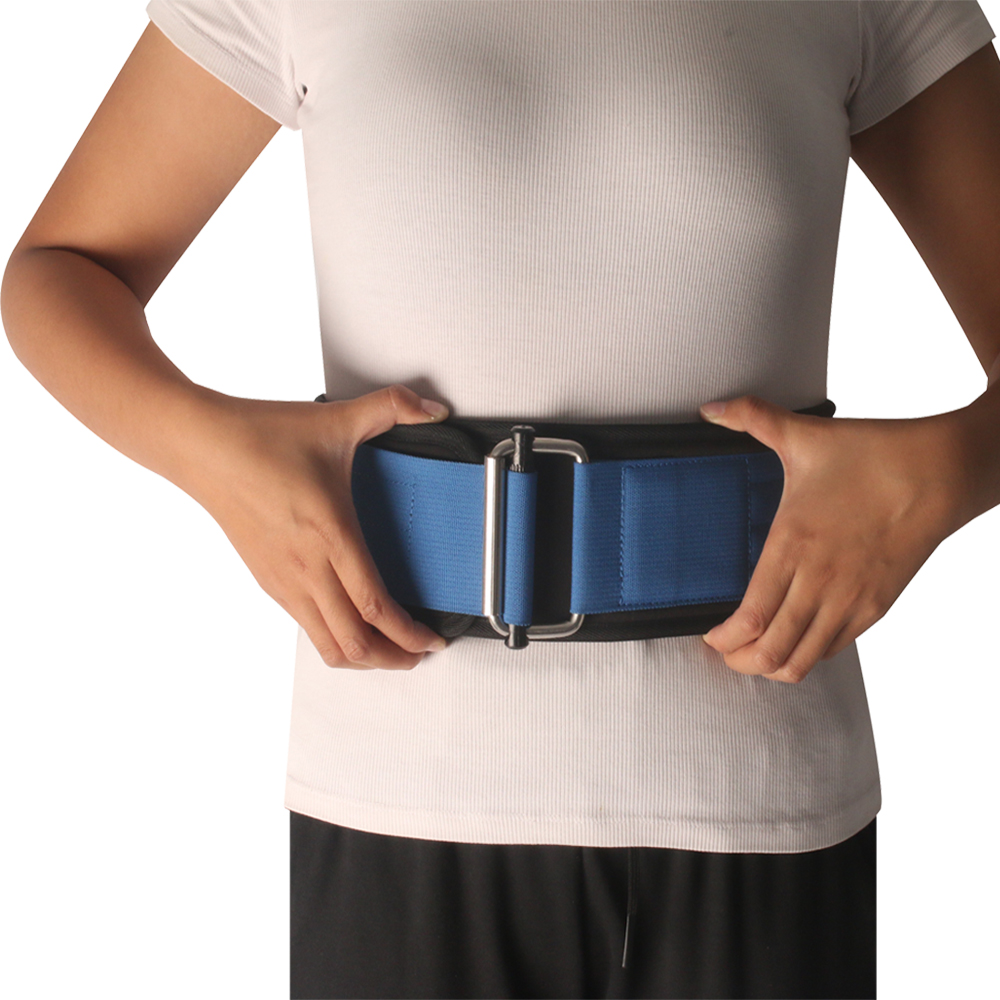
The market offers multiple solutions based on training goals. Nylon and Velcro belts are best for functional fitness, cross-training, and moderate loads. They are highly scalable. You can easily loosen or tighten them during fast-paced workouts. However, they lack the rigidity needed for elite strength sports.
Leather belts represent the gold standard for maximal loads. You can choose between single-prong, double-prong, or lever closure systems. Levers offer rapid fastening and releasing, while prongs allow minor sizing adjustments day to day.
Evaluating hardware specifications ensures you buy the right tool. Thickness plays a massive role in comfort and performance. A 13mm belt provides maximum rigidity. Powerlifters favor this thickness for maximum squats, but it requires a painful break-in period. Conversely, 10mm serves as the industry standard. It provides exceptional support for 90% of lifters while contouring to the body much faster. Width also matters. A standard 4-inch uniform width offers equal pressure all around. Tapered designs provide mobility for specific athletic movements.
Commercial facilities face distinct buying challenges. If you are outfitting a gym, choosing a reputable weightlifting belt manufacturer ensures long-term ROI. You need true-to-size grading and durable hardware. Cheap alloys break easily under stress. A trusted powerlifting belt supplier provides warranties and robust cast-iron levers. These heavy-duty components withstand daily commercial abuse.
The fear of "weakening the core" keeps many athletes away from belts. This dependency myth contradicts basic physiology. EMG studies show abdominal activation actually increases or remains consistent when you use a belt correctly. The belt does not do the work for you. It gives your muscles an immovable object to contract against, facilitating harder muscular contractions.
Implementation realities show us where lifters actually go wrong. Wearing it too tight is the most common mistake. If you cinch the leather as tight as a corset, your abdomen cannot expand. This nullifies the IAP effect entirely. You should be able to slide one finger between your belly and the leather before bracing.
Improper placement causes unnecessary pain. Placing it too low over the hips causes pinching during deep flexion. Placing it too high over the ribs restricts your diaphragm and causes severe bruising. You must experiment to find the anatomical sweet spot, usually centered across the belly button.
We recommend a strategic rollout to optimize your strength curve. Adopt a "warm-up unbelted, work-set belted" approach. Perform all your lighter acclimation sets without equipment. This maintains raw core strength and reinforces your bracing mechanics. Once you hit your heavy working sets, fasten the hardware to protect top-end progression.
Deciding to integrate a belt requires an honest evaluation of your training stage. Master your unbelted form first. Ensure you thoroughly understand how to generate IAP using the Valsalva maneuver. Once you consistently lift above 80% of your 1RM on squats and deadlifts, purchasing quality equipment becomes a high-ROI decision.
Take action by auditing your current training logs. Identify your working weights and see if they meet the load and intensity thresholds discussed today. If you are hitting RPE 8 regularly on compound lifts, you are leaving strength on the table. Measure your waist at the navel level, research reliable sizing charts, and prepare to elevate your heavy lifting safely.
A: No. Evidence shows proper belt usage allows for heavier loads, which in turn stimulates greater overall muscular adaptation, including the core. EMG studies prove that abdominal muscle activation remains high because you actively push against the material to create pressure.
A: No. Fasten it only for heavy, working sets of compound lifts. Loosen or remove it between sets and during isolation work to allow normal breathing. Wearing it continuously masks raw core engagement and can unnecessarily elevate your blood pressure during rest periods.
A: Yes. Women generally have shorter torsos; a standard 4-inch belt may dig into the ribs or hips. A 3-inch wide belt is often a better anatomical fit for female lifters. It provides sufficient intra-abdominal pressure without causing painful bruising or restricting mobility.
A: Wipe down sweat after every session to prevent leather degradation. Occasionally rub in a specialized leather conditioner to keep the material supple and prevent cracking. Keep lever mechanisms free of chalk buildup and debris to prevent mechanical failure during heavy lifts.
