- All
- Product Name
- Product Keyword
- Product Model
- Product Summary
- Product Description
- Multi Field Search
Please Choose Your Language

Views: 0 Author: Site Editor Publish Time: 2026-09-30 Origin: Site


Many gym-goers view all waist-worn training accessories as completely interchangeable. This core misconception leads to severe errors on the training floor. Both tools wrap tightly around your waist. However, their biomechanical purposes remain complete opposites. One accessory creates vital internal stability. The other simply adds heavy external resistance. Using the wrong belt actively compromises athlete safety. For example, hanging heavy plates from a standard lifting belt ruins the buckle mechanism. Conversely, squatting heavily in a dip belt provides absolutely zero spine support. This common mistake also wastes critical procurement budgets for commercial facilities.
Our objective is to provide a definitive, biomechanics-based breakdown. We will clarify exactly how these popular tools differ in function and design. You will learn how to choose the precise gear for specific movements. This comprehensive guide helps athletes, gym owners, and facility managers make the right equipment investment every time.
Purpose: Weightlifting belts increase intra-abdominal pressure (IAP) to stabilize the spine; dip belts act as a harness to suspend external weight from the hips.
Primary Exercises: Choose a weightlifting belt for squats, deadlifts, and heavy presses. Choose a dip belt for pull-ups, dips, and belt squats.
Design & Material: Lifting belts prioritize rigid materials (stiff leather, nylon) and secure closures (lever, prong). Dip belts prioritize tensile strength, heavy-duty stitching, and steel chain/strap systems.
Sourcing: High-volume gym owners should partner with a specialized weightlifting belt supplier or dip belt manufacturer to ensure load-tested durability and liability reduction.
Understanding the fundamental physics behind each tool prevents dangerous gym accidents. Athletes often misunderstand how these accessories interact dynamically with the human body during heavy exertion.
A rigid lifting belt does not support your back passively. Instead, it acts as a critical tactile cue for your abdominal wall. When you inhale deeply before a heavy lift, your core expands. The belt provides a hard physical wall for your core muscles to brace against. This dynamic bracing maximizes intra-abdominal pressure (IAP). Increased IAP creates a rigid cylinder of support entirely around your lower spine. We rely on this internal pressure to prevent dangerous spinal flexion during heavy loads. The belt simply amplifies your body's natural stabilization mechanics. It ensures your vertebrae remain stacked safely under extreme compression.
Unlike a lifting belt, this accessory functions strictly as a load-bearing sling. It does not compress your core or create internal pressure. You use it to transfer the weight of heavy plates or kettlebells directly to your hips and pelvis. The design effectively removes your delicate spine and upper body entirely from the active load path. It hangs loosely around the lower lumbar region and rests heavily on top of the glutes. The chain or nylon strap dangles securely between your legs, pulling the weight straight down toward the floor.
You must ask yourself one primary question before training. Is your ultimate goal to protect the spine during a ground-based compound lift? Or do you want to progressively overload a strict bodyweight movement? Your answer dictates your equipment choice instantly.
Chart: Functional Decision Matrix
Training Goal | Biomechanical Need | Correct Equipment Choice |
|---|---|---|
Ground-based compound lifts (squats, deadlifts) | High intra-abdominal pressure, spinal stabilization | Weightlifting Belt |
Bodyweight movement overload (pull-ups, dips) | External load suspension, pelvic weight transfer | Dip Belt |
Lower body training avoiding spinal compression | Direct hip loading, lumbar relief | Dip Belt (for belt squats) |
Athletes face immense spinal compression during maximal strength phases. You must deploy the right rigid support to mitigate injury risks effectively.
You absolutely need a weightlifting belt for squats, deadlifts, and heavy overhead presses. These specific ground-based movements place maximum sheer force on your lumbar spine. A high-quality belt allows you to lift roughly five to fifteen percent more weight securely. It achieves this performance boost by giving your central nervous system a heightened sense of stability. The increased internal pressure keeps your vertebral column stacked safely, preventing energy leaks during the concentric phase of the lift.
Different strength disciplines require highly specific belt architectures. You cannot use them interchangeably without sacrificing mobility or bracing power.
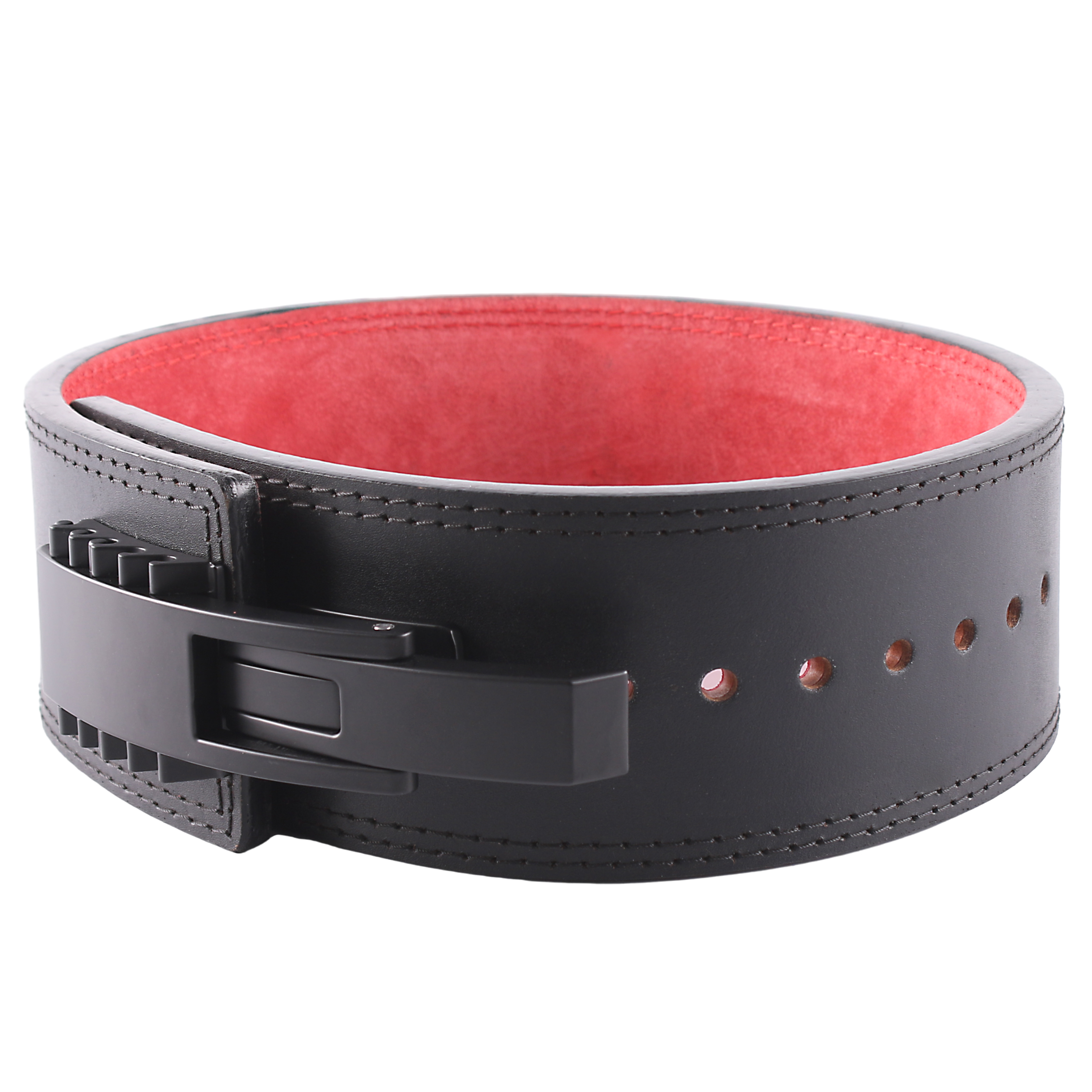
Powerlifting belts: A standard powerlifting belt features a uniform 10mm to 13mm thickness. The width remains an even four inches all the way around your torso. This bulky, rigid design maximizes surface area for core bracing during max-effort static lifts.
Olympic lifting belts: These feature a highly tapered design. They remain wide in the back but narrow significantly in the front abdominal section. This unique shape allows deep, uninhibited hip flexion. Athletes desperately need this clearance during dynamic explosive movements like the snatch or the clean and jerk.
Many novice lifters rely on belts too early in their training sessions. We highly recommend keeping belts off during warm-ups or light volume sets. You must ensure athletes develop natural core stabilization first. Constant over-reliance on artificial support weakens the transverse abdominis over time. Save the rigid support exclusively for working sets exceeding eighty percent of your one-rep max.
Strict bodyweight exercises eventually lose their ability to stimulate muscle growth. You will inevitably hit a plateau once you can perform high repetitions easily. At this stage, external resistance becomes mandatory.
You must introduce a weighted dip belt for advancing in calisthenics and gymnastics strength training. Holding a heavy dumbbell awkwardly between your feet becomes dangerous and highly impractical past a certain weight. The belt provides a highly secure, infinitely scalable way to add heavy resistance. It allows you to track progressive overload accurately, just like you would on a standard barbell.
Certain upper body movements benefit massively from safely suspended external loads.
Pull-ups and Chin-ups: Using a dip belt for pull ups builds incredible lat and bicep hypertrophy. It forces your upper back musculature to pull significantly more than your total body mass.
Chest and Triceps Dips: Suspending thick plates from your waist turns a basic triceps exercise into a massive chest builder. The load hangs centrally below your center of gravity. This keeps your torso angled perfectly for maximum pec major activation.
We see a massive growing trend of using this equipment for "belt squats." You stand on two elevated boxes and let the heavy weights hang directly between your legs. You then squat down normally. This setup trains the lower body intensely while completely unloading the vulnerable lumbar spine. Physical therapists globally love this variation. It serves as an ideal solution for back injury rehabilitation. Athletes can hammer their quads and glutes without compressing their healing vertebrae.
Gym equipment faces severe daily abuse. Commercial facilities and serious garage gym owners must evaluate construction materials rigorously before making any purchasing decisions.
You must balance extreme durability against wearer flexibility when selecting materials and hardware.
Materials: Top-grain leather offers maximum rigidity and decades of reliable durability. It takes several weeks to break in properly and mold to your waist. Synthetic nylon provides immediate flexibility and high comfort. However, nylon occasionally yields slightly under extreme maximal loads.
Closure Systems: Lever action belts provide a rapid quick release and unyielding rigidity. Single or double prong belts offer easy adjustability for fluctuating daily waistlines. Velcro closures suit light-duty functional fitness workouts where rapid exercise transitions happen constantly.
Suspension gear requires entirely different safety metrics. A structural failure here drops heavy iron plates directly onto your feet or shins.
Load Capacity: The belt must feature heavily reinforced D-rings. It requires heavy-duty steel chains or thick reinforced nylon webbing. The entire unified system must be capable of holding 200 pounds or more safely without fraying.
Comfort and Contouring: Look for thick neoprene padding or specifically widened back panels. Heavy suspended loads dig aggressively into the pelvis and hip bones. Proper internal padding prevents severe hip bruising under extreme weights.
Commercial gym owners must avoid generic white-label gear found on massive e-commerce sites. We emphasize the critical importance of vetting a credible dip belt manufacturer. Similarly, partner only with a deeply trusted weightlifting belt supplier. Professional vendors provide official load stress-test certifications. They offer robust warranty terms and dedicated professional customer service. Buying certified equipment actively reduces liability risks for your facility.
Table: Material Specifications Overview
Equipment Type | Ideal Material | Primary Hardware | Failure Point to Watch |
|---|---|---|---|
Powerlifting Belt | 10mm - 13mm Top-Grain Leather | Cast Iron Lever or Steel Prongs | Lever hinge cracking |
Olympic Belt | Tapered Leather or Stiff Nylon | Single Prong or Heavy Velcro | Velcro degradation |
Weighted Dip Belt | Nylon Webbing with Neoprene | Steel D-Rings, Carabiners, Chain | D-Ring stitching tearing |
Social media often spreads highly dangerous misinformation regarding fitness equipment hacks. Analyzing a dip belt vs weightlifting belt reveals they serve entirely different masters. They share zero structural crossover.
We must address a highly dangerous user-generated content trend found on popular fitness forums. Many novice lifters attempt to thread hardware store chains through a standard weightlifting belt to perform weighted dips. You should never do this under any circumstances. Prong holes and cast lever mechanisms undergo design testing exclusively for outward horizontal expansion. They are not engineered for severe downward sheer force. The leather will eventually tear completely. The buckle mechanism will fail violently mid-set.
Some lifters attempt the reverse error. They wrap a soft dip belt tightly around their waist to squat heavy barbells. We must clarify exactly why this fails. The soft, flexible back of a standard suspension belt provides absolutely zero intra-abdominal pressure generation. It completely lacks the rigidity necessary to form a bracing wall. Your core simply pushes the soft neoprene outward without creating any meaningful spinal stability.
They remain mutually exclusive tools. They share absolutely no biomechanical overlap. Serious training facilities and dedicated home gym owners must invest in both pieces of equipment separately. Attempting a cheap two-in-one hack only leads to destroyed equipment or severe physical injury.
The final equipment decision ultimately comes down to your specific training modality. You require rigid spinal stabilization to move heavy barbells safely. You need vertical load addition to progress your bodyweight movements effectively. Neither tool replaces the critical function of the other.
We encourage you to audit your current training program immediately. Gym owners should evaluate their specific facility needs based on membership demographics and strength levels. Create a brief checklist for inspecting all current belts for dangerous wear and tear. Check the heavy D-ring stitching on your suspension gear carefully. Inspect the cast metal lever hinge integrity on your rigid lifting belts. Retire any compromised gear before making a brand-new, purpose-driven purchase.
A: You can only use it for specialized "belt squats" where the weight hangs directly between your legs. You cannot use it to support your core during a traditional barbell back squat. It lacks the rigid structure necessary to create intra-abdominal pressure and protect your spine.
A: Yes, they are essential for anyone who can easily perform ten or more strict bodyweight pull-ups or dips. It remains the most biomechanically safe and effective way to progressively overload these movements. Holding a dumbbell between your feet becomes dangerous as you get stronger.
A: Bodybuilding or Olympic belts feature a tapered design. They sit wider in the back and narrower in the front to allow deep hip mobility. Powerlifting belts maintain a uniform width (usually four inches) all the way around. This bulky shape maximizes total core bracing for static lifts.
